

Regulation No./25/CEMAC/UMAC/CM/COBAC of December 19, 2025, introduces a rigorous centralized mechanism for debtor self-discipline, essentially altering the restoration panorama and shopper threat administration throughout the CEMAC zone amid rising NPLs.
Apply Areas: Banking & Finance, Company Compliance, and Dispute Decision
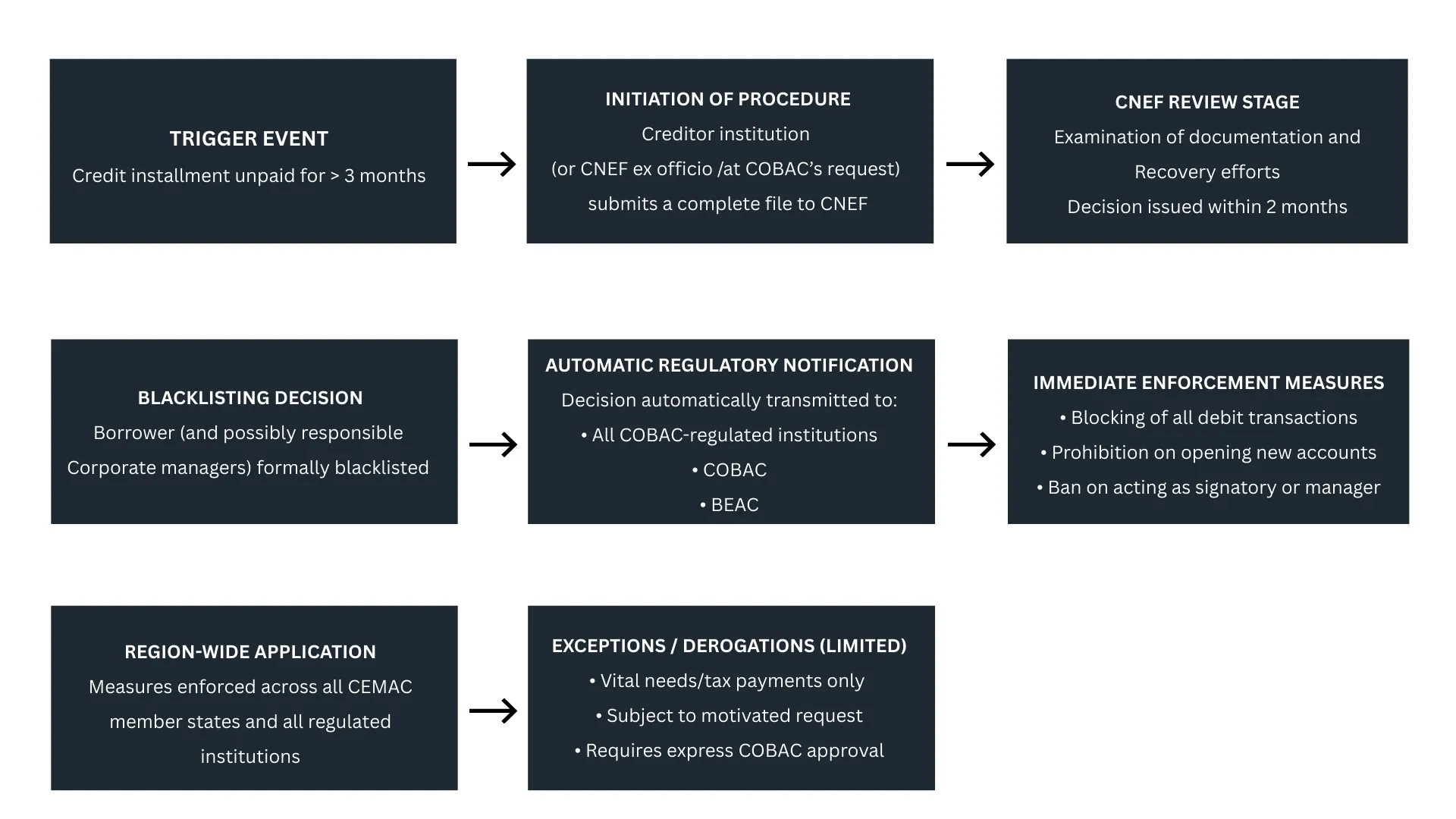
On 19 December 2025, the Ministerial Committee of the Financial and Financial Neighborhood of Central Africa (CEMAC) adopted a well timed regulation aimed toward curbing non-performing loans (NPLs) throughout the area’s monetary system. Regulation No./25/CEMAC/UMAC/CM/COBAC regarding the blacklisting of purchasers of entities topic to COBAC in case of non-repayment of credit score (the “Blacklisting Regulation”) establishes a strong, centralised disciplinary regime for debtors in default.
This represents a paradigm shift within the credit score enforcement scheme throughout the CEMAC zone (Cameroon, Central African Republic, Chad, Republic of Congo, Equatorial Guinea, and Gabon).
Shifting past conventional bilateral restoration measures, the Regulation creates a systemic, cross-border sanction with important operational and authorized ramifications for regulated monetary establishments, their company purchasers, and particular person debtors.
1. The Core Mechanism: “Mise à l’Index” (Blacklisting)
On the coronary heart of the Regulation is the “mise à l’index” (Blacklisting) – a extreme administrative sanction pronounced not by the creditor financial institution, however by the Nationwide Financial and Monetary Committee (Comité Nationwide Économique et Financier or “CNEF”) of the related member state, below the supervision of the Central African Banking Fee (COBAC).
A blacklisted particular person is prohibited from:
- Conducting any debit transaction on any financial institution or cost account they maintain, signal, or handle throughout the CEMAC banking system (with slender exceptions).
- Opening any new account or appearing as a signatory/authorised consultant on an account.
This successfully constitutes a purposeful banking exclusion during the measure, severely limiting a person’s or firm’s capacity to function financially throughout the area.
2. Key Triggers and Process
- Set off: An unpaid credit score instalment overdue by greater than three (3) months.
- Who can provoke: The creditor establishment or the CNEF by itself initiative or at COBAC’s request.
- Who’s liable? the shopper, the guarantor, and the endorser of the borrower.
- Course of: The CNEF decides inside two months of a whole file. The sanction is then routinely communicated to all regulated entities, COBAC, and the BEAC, guaranteeing region-wide enforcement.
- Extension to Administration: For company defaulters, the CNEF can prolong the blacklisting to senior managers (Common Administrator, Supervisor, Common Supervisor, or Deputy Common Supervisor of the authorized entity) deemed answerable for the default, following a compulsory non-objection process with COBAC.
3. Crucial Implications for Monetary Establishments
For banks, microfinance establishments, and cost service suppliers, this isn’t merely a brand new restoration software however a supply of stringent operational and compliance obligations:
- Enhanced Due Diligence & Contractual Updates: Compulsory pre-credit checks and credit score settlement templates should be revised to include obligatory clauses referencing the blacklisting regime.
- Procedural Rigour: Establishments should doc and show that proportionate restoration measures have been tried earlier than submitting a request with the CNEF.
- System-Extensive Enforcement & Monitoring: Upon notification, establishments should instantly block accounts and transactions of blacklisted purchasers. They have to additionally display screen transactions to establish helpful house owners who could also be blacklisted.
- Lifting Obligations: Establishments have a optimistic obligation to promptly inform the CNEF as soon as a debt is regularised to carry the measure.
- Value: A fee, payable by the requesting establishment to the CNEF, is levied for every profitable blacklisting.
4. Dangers and Recourse for Purchasers (Company & Particular person)
Debtors face unprecedented penalties:
- Extreme Enterprise Disruption: For corporates, a blacklisting can immediately paralyse operations by freezing money flows.
- Private Legal responsibility: Administrators and managers face private monetary incapacitation if the company blacklisting is attributed to them.
- Felony Penalties: Knowingly conducting a prohibited transaction whereas blacklisted is a prison offence, punishable by imprisonment (6 months to five years) and heavy fines.
- Restricted Exceptions: Derogations for “important wants” or tax funds are attainable however require a motivated request and approval from COBAC.
- Recourse: A two-tier appeals course of exists (first to the CNEF, then to COBAC), with strict two-month deadlines.
5. Strategic Concerns and Suggestions
The Regulation, efficient 1 January 2026, requires quick motion:
For Monetary Establishments:
- Conduct a Hole Evaluation: Evaluate inner controls, credit score insurance policies, and agreements for compliance with the Blacklisting Regulation.
- Replace IT Techniques: Guarantee programs can combine with COBAC/CNEF registries, impose automated blocks, and flag helpful house owners.
- Prepare Employees: Entrance-office, compliance, and restoration groups should be educated on the brand new triggers and procedures.
- Develop Inside Protocols: Outline clear governance for deciding when to provoke a blacklisting request.
For Company Debtors:
- Prioritise Debt Dialogue: Proactively have interaction with lenders on the first signal of misery. Amicable restructuring or rescheduling (complying with COBAC guidelines) prevents blacklisting.
- Strengthen Governance: Doc decision-making to mitigate private legal responsibility threat for administrators.
- Evaluate Contingency Plans: Assess operational resilience within the occasion of a possible banking entry freeze.
For All Events:
- Meticulous Documentation: All communications with the CNEF and COBAC should be in writing, accompanied by proof of receipt.
- Monitor Secondary Laws: COBAC is remitted to situation a number of implementing rules (e.g., on fee charges, registry entry, publication modalities). Staying forward of those is essential.
The CEMAC Blacklisting Regulation is a daring and aggressive software to deal with systemic NPLs. It considerably amplifies the stakes of credit score default, remodeling it from a business dispute right into a public administrative sanction with crippling cross-border results.
Whereas aiming to strengthen monetary stability, it creates a posh new layer of regulatory threat. Efficiently navigating this new setting would require proactive authorized evaluate, sturdy compliance upgrades, and strategic monetary administration.
Contact our Banking & Finance, Company Compliance, and Dispute Decision Apply groups for a tailor-made NPL affect evaluation, compliance methods, and defence preparedness.
This publication is supplied for normal data functions solely and doesn’t represent authorized recommendation. Skilled recommendation needs to be looked for particular circumstances.