

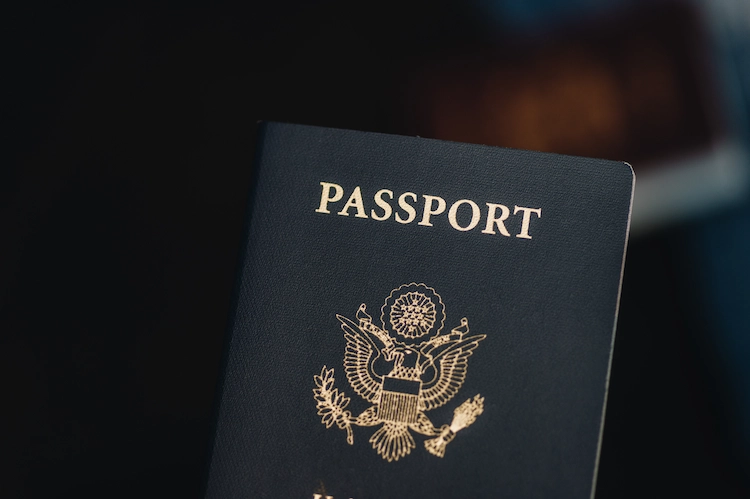
On Could 15, 2025, the U.S. Supreme Courtroom heard oral arguments in Trump v. CASA, Inc., Trump v. Washington, Trump v. New Jersey, all of which problem President Donald Trump’s govt order to finish birthright citizenship for the youngsters of undocumented and short-term immigrants. Whereas the problems earlier than the Courtroom are largely procedural at this level, the Courtroom’s choice will nonetheless be consequential, significantly with regard to decrease courts’ issuance of nationwide injunctions.
Information of the Case
The circumstances middle on President Trump’s Govt Order relating to birthright citizenship, entitled Defending the That means and Worth of American Citizenship, Exec. Order No. 14156 (Citizenship Order or Govt Order). The Citizenship Order proclaimed that birthright citizenship below the Fourteenth Modification doesn’t apply to youngsters born in the USA when: (1) their mom was unlawfully current within the nation and their father was neither a U.S. citizen nor a everlasting resident on the time of the kid’s beginning; or (2) when their mom was lawfully, however briefly, current in the USA and their father was neither a U.S. citizen nor a everlasting resident.
In assist of the Govt Order, attorneys for the Trump Administration argue that birthright citizenship doesn’t embody the youngsters of authorized and unlawful aliens as a result of such individuals will not be “topic to [U.S.] jurisdiction” as set forth in Structure’s Citizenship Clause. Pursuant to the 14th Modification: “All particular person born or naturalized in the USA, and topic to the jurisdiction thereof, are residents of the USA and of the State whereby they reside.”
The 14th Modification repudiated Dred Scott v. Sandford, 19 How. 393 (1857), which infamously misinterpreted the Structure to disclaim U.S. citizenship to folks of African descent primarily based solely on their race. Congress has reaffirmed the Citizenship Clause within the Immigration and Nationality Act (INA), whereas the U.S. Supreme Courtroom affirmed the existence of birthright citizenship in United States v. Wong Kim Ark. It held that the 14th Modification “affirms the traditional and elementary rule of citizenship by beginning throughout the territory, within the allegiance and below the safety of the nation, together with all youngsters born right here of resident aliens.”
Citing this precedent, the Citizenship Order was shortly met with authorized challenges. Three district courts in Maryland, Massachusetts, and Washington have issued nationwide injunctions on the behest of twenty-two States, two organizations, and 7 people.
Points Earlier than the Supreme Courtroom
The Trump Administration requested the Supreme Courtroom to grant a partial keep, in search of to restrict the scope of the injunctions to cowl solely these people instantly impacted by the related court docket orders.
“These circumstances — which contain challenges to the President’s January 20, 2025 Govt Order regarding birthright citizenship — elevate essential constitutional questions with main ramifications for securing the border,” Appearing U.S. Solicitor Basic Sarah Harris wrote. “However at this stage, the federal government involves this Courtroom with a ‘modest’ request: whereas the events litigate weighty deserves questions, the Courtroom ought to limit the scope of a number of preliminary injunctions that purport[t] to cowl each particular person… within the nation, limiting these injunctions to events really throughout the courts’ energy.”
On April 17, 2025, the Courtroom consolidated the circumstances for oral argument, agreeing to think about the next problem: “Whether or not the Supreme Courtroom ought to keep the district courts’ preliminary injunctions besides as to the person plaintiffs and recognized members of the organizational plaintiffs or states.”
Oral arguments had been held on Could 15, 2025. As reported by SCOTUSblog, U.S. Solicitor Basic D. John Sauer argued that President Trump’s Citizenship Order “displays the unique that means of the 14th Modification,” which was solely meant to use to the youngsters of former enslaved individuals. Sauer additionally addressed nationwide injunctions, characterizing them as a “bipartisan drawback that has now spanned the final 5” presidential administrations. He additional argued that common injunctions create various points, similar to stopping novel authorized questions from growing within the decrease courts, permitting plaintiffs to discussion board store, requiring courts to behave too shortly, and creating an “ongoing threat of conflicting judgments.”
In response, Kelsi Corkran, an lawyer for the personal plaintiffs difficult the Citizenship Order, emphasised that “each court docket to have thought-about the problem” has decided that Trump’s govt order is “patently illegal.” Representing the states difficult the order, Jeremy Feigenbaum, the solicitor common of New Jersey, argued that common injunctions ought to nonetheless be allowed in circumstances the place various cures will not be legally or virtually workable.
Throughout oral arguments, a number of justices questioned the usage of nationwide injunctions. “We survived till the Nineteen Sixties with out common injunctions,” Justice Clarence Thomas acknowledged. On the identical time, justices additionally questioned whether or not class actions can be an appropriate various.
At this level, it’s unclear how the Courtroom will rule. A choice is anticipated by early July. Please test again for updates.
The put up SCOTUS Considers Birthright Citizenship appeared first on Constitutional Regulation Reporter.